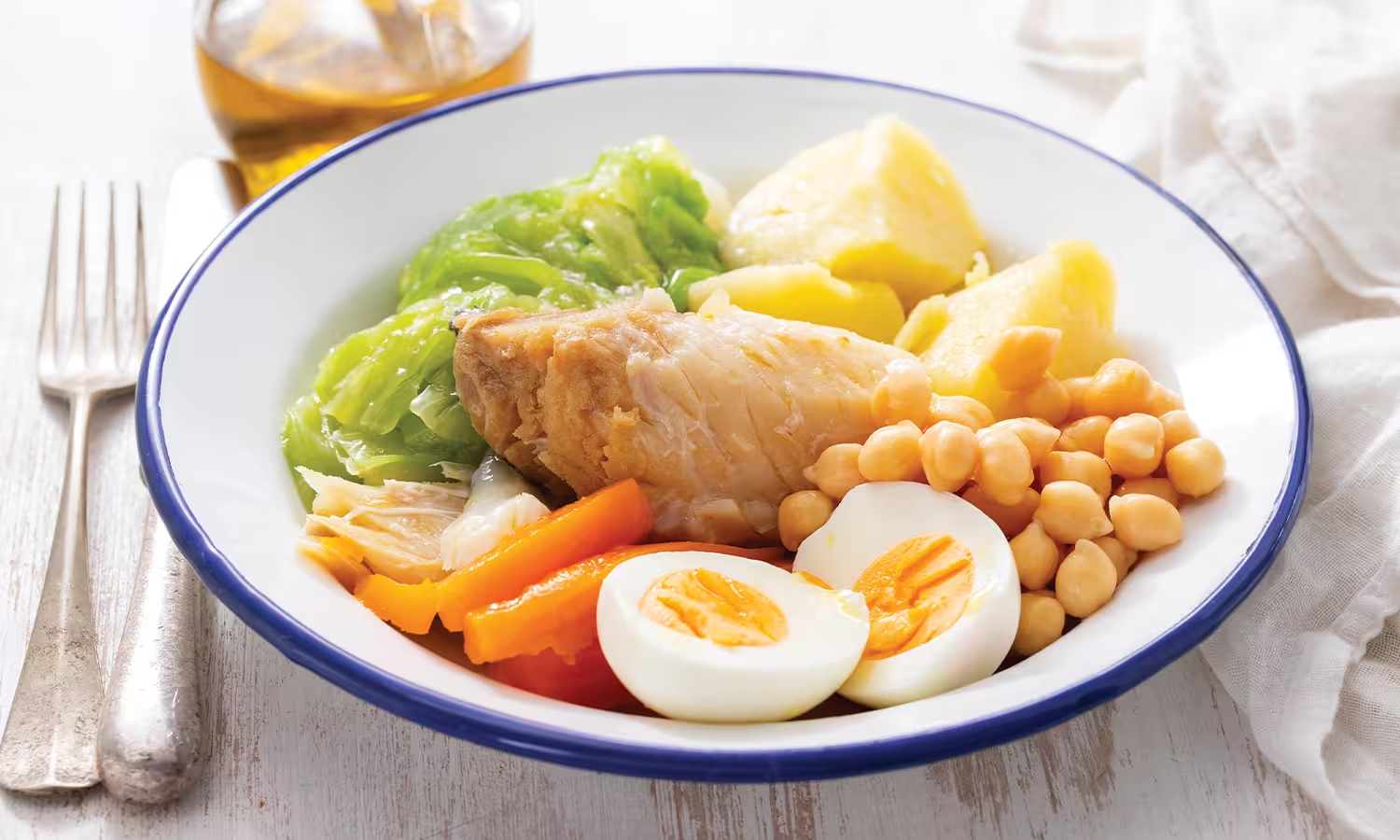
Food culture and gastronomy are born from the relationship between communities and territory, generating living traditions that express identity, memory, and creativity in the face of scarcity.
Today, increased longevity, social, demographic and climatic changes, and new knowledge about the relationship between health and food demand that tradition critically engage in dialogue about these changes so as not to lose its place at our table.
Preserving tradition implies knowing it, involving communities in it, adapting it responsibly, and keeping it accessible as a collective and evolving heritage.
This dialogue about building future solutions for the food traditions that protect us, in collaboration with nutrition professionals, seems fundamental to us and cannot wait.
Throughout this short essay, we make several proposals for intervention in this regard.
What characterizes and distinguishes us?
Food culture arises from the profound relationship between human beings and the territory they inhabit. It is the result of how each community observed, understood, and transformed available resources into food, seeking not only to survive, initially, but also to find pleasure, identity, and well-being at the table. Even in a constantly changing world, food continues to be a place of memory, belonging, and meaning (1)
Gastronomy is a cultural expression of this relationship. Each recipe tells a story: of the place it comes from, of the people who created it, of the circumstances that shaped it. The repetition of these gestures and flavors over time gives rise to tradition — not as something immutable, but as a living heritage, in constant transformation, accompanying the evolution of societies that reflects the values, beliefs and way of life of communities in a given territory (2,3).
In the Mediterranean region, and particularly in Portugal, the cultural response to scarcity was creativity. From this emerged a diverse, seasonal food model deeply connected to the plant world, where ingredients gain expression through know-how. This is the basis of our Mediterranean diet, which is an intangible heritage of humanity (4, 5).
Portuguese gastronomic tradition also reveals an ethic of care and sharing. The full use of food, the appreciation of what is local and available, and the rejection of waste reflect forms of social organization based on proximity, solidarity, and the economy of daily life. There is an environmental ethic here, built from the knowledge of each generation (6,7).
Much of what we recognize today as tradition was born out of necessity, scarcity, adaptation, and creativity in the face of poverty. This creativity characterizes and enriches us. It should not shame us.
The current context presents new challenges. Environmental, technological, social, and even geopolitical transformations demand that tradition not only be preserved but also critically examined. The future of food culture lies in the ability to engage with the past, reinventing it with awareness, creativity, and responsibility, so that it continues to make sense in the present and the future.
Tradition as evolution and coexistence with new knowledge in nutrition
As a practice deeply linked to the biological and cultural needs of human groups, food tradition can—and often should—be reinterpreted in light of contemporary health and wellness goals. Adapting does not mean losing identity, but ensuring that this heritage continues to fulfill its function in a sustainable and meaningful way.
The pursuit of longevity and more years of life without disease has made nutrition an unavoidable determinant of health, particularly when the average human life expectancy increased from 50 to 85 years in just a few decades. Today, we know that many of the most common diseases in these later years of life are shaped by what we eat. This means that diseases that were hardly ever heard of at the beginning of the 20th century—because we didn't live so long—such as diabetes, cardiovascular diseases, or cancer, all strongly influenced by diet, are now the leading causes of death in an aging society. This is something we cannot deny (8, 9).
Inadequate nutrition—and when I say inadequate, I mean a high-calorie diet that promotes overweight, obesity, and associated diseases—also results from changes that have occurred in our societies very recently.
At the beginning of the 20th century, people expended more energy because working life, essentially manual labor, demanded it. Today, thankfully, we expend less energy daily because comfort and technology have reduced this demand.
The human body remains the same, but the context around us has changed profoundly — and it is this mismatch that is at the root of many of today's health challenges. In the early 1960s, agriculture employed a large part of the active population in Portugal: around 42% of total employment was agricultural. Currently, this proportion is much lower, with only about 3% of the active population working in the sector. This is just one example (10, 11).
The problem is that the body biologically needs less energy, but our brains and the cells of our bodies remain essentially the same as they were thousands of years ago. Today we need much less energy daily, but we continue to consume foods that have been fine-tuned for centuries for physically demanding lives. The deep brain and the body continue to prefer foods that we, nutritionists, classify as very energy-dense, especially when we switch off the rationality switch.
And we are all irrational and emotionally fragile beings, several times a day: when we make impulse purchases at the supermarket, when we eat in front of the television, when we get angry, when we seek comfort food. At these moments, the brain, less capable of reacting to emotional disturbance, switches off the 21st-century food control button and enters primitive mode — an almost “Neanderthal” mode, programmed thousands of years ago — almost always choosing the immediate pleasure of sugar, fat, and calories, which quickly activate the pleasure centers in the brain (12, 13, 14).
This imbalance is at the root of today's diseases of excess: obesity, metabolic diseases, and less functional aging.
Consuming many nutrients, vitamins, or minerals, while simultaneously consuming less energy—or drastically reducing energy intake—is a proposition that goes against biological nature. It's a radical gamble on change. Humans have always lived in environments of scarcity and have always accumulated. Those who accumulated and gained weight survived for thousands of years, adapting their bodies to this biology.
Now, what they are asking of us in this technological world, with its little physical effort and low energy expenditure, is that we avoid precisely the energy and fat that we have always instinctively sought and that we are biologically prepared to accumulate. It's like asking a lion, or another carnivore, to start eating lettuce.
And what does all this have to do with food or gastronomic tradition?
The preservation of gastronomic tradition has, in itself, undeniable heritage and historical value. However, this symbolic value does not automatically guarantee its survival—just as the traditional dietary model of the past does not, by itself, guarantee our health throughout a longer life. Because living longer should mean living most of those years without illness and with quality of life. That is what should interest us.
There are food traditions that protect our health. There are others—or others—that kill us prematurely. Not all traditions are good, nor are all traditions bad. Maintaining a tradition simply because "it's always been that way," uncritically, is what is (in my view) problematic.
The scientific evidence accumulated in recent years demonstrates that the consumption of processed meat and alcohol is associated with a significant increase in the risk of cancer, through mechanisms such as chronic inflammation, oxidative stress, the formation of carcinogenic compounds and direct DNA damage. In contrast, dietary patterns rich in vegetables, legumes (broad beans, peas, beans, lupins, chickpeas and lentils), nuts (almonds, hazelnuts, walnuts…), whole grains and fruit are associated with reduced mortality and disease risk. This includes a large part of our traditional soups and stews (vegetable stews, fish stews, cataplanas), prepared with almonds and walnuts, olive oil, vegetable-based side dishes — such as creamy rice dishes — and also the vast diversity of fruit produced in Portugal (15, 16, 17).
Under certain circumstances, it may be essential to allow tradition and innovation to coexist. Maintaining traditional practices in dialogue with new products, techniques, and approaches is a way to strengthen our food culture.
Innovating often means adapting what we recognize as close to communities, updating and legitimizing its food and gastronomic function. A vegetable stew that is renewed with the addition of newly cultivated vegetables is a renewed soup. Bread made with water, less salt, flours, and yeasts cooked at different times, but in the same oven, is bread that reinvents itself. Does a stew with fewer smoked meats and more vegetables, while preserving the traditional cooking method, cease to be a stew? I don't think so. Does a stew served with basmati rice with curry instead of Carolina rice cease to be a stew? Perhaps so.
The acceleration of time and food tradition
An example of the need to innovate also stems from the fact that the planet is changing more rapidly than in the past. What characterizes the current moment is not change itself—that has always existed—but the speed of change. In the Mediterranean world, over the last eight thousand years, there has always been dietary adaptation. In the last five hundred years, foods now considered traditional have been introduced slowly and progressively, such as tomatoes, peppers, chili peppers, potatoes, common beans, pumpkin and zucchini, corn, cocoa, chocolate, vanilla, peanuts, sunflower and its oil, pineapple, kiwi, and avocado.
This was a process of food and gastronomic evolution and adaptation that has always existed, but which today occurs with different assumptions and, above all, at a much faster pace. The slow evolution that characterized the period up to the mid-20th century has been replaced, in the 21st century, by an increasingly accelerated evolution.
This slow evolution was largely driven by those who possessed local knowledge—in many cases, the inhabitants of the territories where the food was produced and processed. The rapid evolution we observe today, however, may very likely cease to be driven by those who possess this popular gastronomic knowledge, geographically and culturally connected to the production process. This risks losing much of that value due to a lack of attention to the processes, a lack of people residing in these territories, and a lack of local critical mass to guide these processes in our own territories where the food is produced.
Franchises of new ways of eating — from fast food to bakeries — bring with them the know-how of producing intense and easy flavor at low cost and a mechanical and studied way of implementing and making money. In these models, the territories provide only the physical spaces, the stores and the people, but the know-how is lost. Something similar also happens with the franchised models of new agriculture (18).
These rapid changes are likely to become even more frequent in our territories, especially if food processes and products resulting from a long tradition are placed in a protective bubble, without the possibility of adaptation. If they are not encouraged to evolve thoughtfully, in dialogue with new consumption models, relationships with society, and new formats of communication and dissemination, they will lose relevance.
Contrary to popular belief, tradition is lost much more quickly than it takes to build it. Family-based food and gastronomic traditions are now largely in the hands of very small businesses and aging families, with knowledge based primarily on oral transmission. This knowledge is disappearing from these territories every minute as time goes on.
Climate change and food traditions
This change, associated with increased longevity and the acceleration of social transformations resulting from the shortening of time, distances and families, is further compounded by climate change. In Portugal, and particularly in southern Europe, climate change has arrived and is having a strong impact (19).
In the food system, these impacts translate into a reduction in agricultural productivity, an increase in pests and diseases, and an increase in production costs, as well as their unpredictability. All of this affects the quality and availability of traditional foods, and can lead to higher prices and greater dependence on imports (20, 21).
Given this scenario, Portugal will have to invest in adaptation strategies, such as the efficient use of water, crop diversification, the selection of more drought-resistant varieties, and the adoption of sustainable agricultural practices, to guarantee food security in the future. This means that some foods or ingredients from our tradition may soon see their accessibility altered, requiring different models of food consumption.
This change will happen rapidly over the next ten years. Those concerned with preserving tradition will have to anticipate changes in the availability and accessibility of ingredients, as the prices of some ingredients may change significantly. Those who are not prepared will be the first to lose the ability to maintain a sustainable business.
Demographic changes and food traditions
Portugal is currently experiencing a "demographic winter" with a persistently low birth rate, accelerated population aging, and insufficient generational renewal. In 2023, the total fertility rate was approximately 1.44 children per woman, clearly below the generational replacement level (2.1) and one of the lowest in Europe.
The inland territories where labor for agricultural work is scarce and the coastal areas where workers for sensitive areas such as gastronomy or tourism are also scarce have led to the need for the country to grow demographically with new workers from other food cultures. In 2017, the legal foreign population in Portugal was relatively low (about 4% of the total population); in 2024 this proportion rose to about 14%–15% of the resident population, with more than 1.5 million foreigners in the country — almost four times as many as about 7–8 years ago (22, 23).
Involvement in the restaurant and service sector, in addition to agriculture, will require a rethinking of food cultures and nutrition education, because the parents of these new Portuguese, who will represent a significant percentage of children enrolled in our school system, will not be familiar with the Mediterranean diet or other aspects of our food culture, which is traditionally passed down from parents to children. In 2024, approximately 33% (one third) of babies born in Portugal were children of mothers born abroad.
How can schools and the community overcome this dilemma in our models of teaching and developing taste?
Geopolitical changes and food traditions
Finally, there is the least expected change. The change in the feeling of physical and food security that has existed in Europe since the 1950s. Currently, we face new political and military challenges and the need to prepare for extreme events such as those resulting from interruptions in the electricity supply, as happened recently, from situations of disruption in the normal functioning of computer systems in transport, from interruptions in the supply of food, water, or even from the disruption of the food system caused by a war in a European country. This possibility has increased substantially in the last 5 years and the situation may worsen soon (24, 25).
Although food is formally recognized as critical national infrastructure, it is virtually absent from the main strategic resilience frameworks and risk assessment exercises. In particular, there are few or no clear guidelines and institutional mechanisms dedicated to coordinating food resilience at the local and community level (26).
However, more traditional food systems, traditional food production practices, forms of local food production, including urban gardens, community gardens, community farms, urban orchards, community-supported agriculture, and the way of producing food and local recipes using locally produced ingredients, represent a space of resilience par excellence that needs to be protected. The same applies to food resilience when understood as a social process, where "culinary know-how" using local products can and should be protected.
How can we maintain tradition in an environment of profound change?
After this diagnosis, it is important to think about solutions. What guidance should be given to those working in the field? How can we act to maintain tradition without inhibiting necessary evolution and creativity?
A first consideration, simple to memorize, can be listed. But then you will need to incorporate deeper thought and action. First, it is necessary to "know what fingers are and what rings are." Second, it is essential to know "how many rings we are willing to lose in order not to lose the fingers that knead the bread.".
Translating this initial thought into five major areas of intervention:
1 – The preservation of products and recipes through the recognition of their intangible character can prevent fragmentation and even the loss of quality knowledge.
For this reason, it is fundamental to recognize and document this heritage of popular culture, guaranteeing its transmission and continuity. Before any innovation or introduction of change, there must always be a mapping—in time and space—of the essential characteristics of this traditional core. Only in this way is it possible to understand the guiding principles that sustain it.
The language of a tradition, understood as the set of core characteristics—products, techniques, and knowledge—that can be known, mastered, and mobilized to evolve continuously, constitutes a fundamental exercise. This process varies from product to product and from territory to territory and, therefore, should be the subject of reflection, discussion, and recording.
This process of recognizing traditional products and recipes as heritage should involve an interdisciplinary approach, integrating anthropologists, historians, cultural heritage technicians, documentalists, academic researchers, nutritionists, as well as those who hold the know-how, such as traditional cooks and local producers. This is an important path, with the support of local authorities, to provide conditions for these professionals to act in a complementary way in the identification, analysis, registration and safeguarding of the intangible cultural heritage of different regions.
Key actions include recognizing the intangible nature of products and recipes, documenting knowledge and practices, mapping traditions in time and space, and identifying their core characteristics
2 – Innovation only works when there is participation.
The introduction of new elements, today as in the past, must always be legitimized by the communities and by the use they make of their own food culture. It is in this use that tradition gains meaning and vitality.
Innovation in food and gastronomic culture should be understood as a continuous and socially situated process, in which the introduction of new elements is legitimized through acceptance, appropriation, and use by the communities that hold this tradition. Just as in the past, it is in the daily practice of food culture—in practices, consumption contexts, and attributed meanings—that tradition is renewed and acquires vitality. Innovation is not imposed externally, but emerges from participatory dynamics within communities, where the dialogue between heritage and change guarantees the identity and cultural continuity of food systems. For example, through the identification and appreciation of traditional cooks, producers, artisans, and families who practice local food culture daily. Through encounters between different generations that favor the transmission of knowledge and reflection on desirable or necessary changes. Through processes of collective experimentation — community kitchens or gastronomic residencies — or through support for local structures such as associations, brotherhoods, cooperatives, or community councils, which ensure the long-term continuity of the identity and culture of food systems.
3 – The dissemination of knowledge associated with gastronomic products and recipes is based on the idea that tradition does not obey a logic of individual ownership, but constitutes a collective heritage.
For this reason, it can give rise to multiple derivations over time and space without losing its essence.
The authenticity and genuineness of products and recipes result from the uniqueness of their production contexts and their cultural integration. These contexts, like culture itself, are constantly evolving. An excessive fixation on rules can therefore have a perverse effect, limiting creativity and adaptability.
4 – Turning tradition, which belongs to everyone, into an exclusively gourmet model doesn't work.
The transformation of gastronomic tradition, understood as collective heritage, into predominantly elitist models proves to be limiting, promotes social inequality, and can even lead to the distortion of many food products or traditional recipes. The vitality of tradition depends on its rootedness in daily use and the broad access of the communities that produce and reproduce it. Thus, both the maintenance of traditional gastronomic practices and innovation processes oriented towards public health and environmental, social, or economic sustainability objectives must be based on principles of accessibility, inclusion, and social justice.
Food culture should remain a common, popular, and shared good, avoiding processes of symbolic appropriation or excessive commodification. In this context, gastronomic tourism requires particular caution and should be guided by responsible models that value local communities without distorting or excluding large segments of the population.
5 – Part of what is traditional — when it is healthy and sustainable — needs to be learned and appreciated at school and in the early years of life, during important moments in family and community life.
A region's food culture is as essential as the air we breathe. It is learned from a very young age, primarily through direct experience with food, and is built throughout life in a context that allows for practice, contact with products, and the appreciation of this interaction through knowledge. The school plays a fundamental role in shaping habits, tastes, and attitudes towards food, functioning as a privileged space for contact with local products, culinary knowledge, and cultural values associated with food.
Currently, it is the responsibility of local authorities to support the integration of educational programs that complement the national curriculum, promote food education projects from the earliest years of schooling, and facilitate collaboration between schools, families, local producers, cultural institutions, and health services. This possibility now depends on the ability of each region to take its future into its own hands with the support of food education professionals capable of integrating health, pleasure, gastronomic tradition, and local culture.
6 – Less is more. What distinguishes it and cannot be copied is the territorial uniqueness of the raw material and the complex uniqueness of the knowledge put into its manufacture. Few and unique, singular local ingredients and a rich history to tell about how it's made.
Nutritional sciences and professionals are currently debating the risks of ultra-processed foods, that is, how industrial formulations produced from substances derived from foods or synthesized in the laboratory (such as refined sugars, modified oils, starches, isolated proteins) often containing additives such as colorings, flavorings, sweeteners, emulsifiers, and flavor enhancers—whose objective is to imitate or intensify the sensory characteristics of unprocessed or minimally processed foods—can affect health. Scientific evidence is accumulating in favor of consistently associating these foods with a higher risk of chronic non-communicable diseases, including obesity, type 2 diabetes, cardiovascular diseases, hypertension, certain types of cancer, and increased overall mortality.
This new knowledge opens up opportunities to seek out products and recipes with high-quality, locally sourced ingredients that are minimally processed, contain minimal additives, but retain the inherent complexity, originality, and tradition of traditional know-how. It also opens the possibility for tradition and innovation to coexist in a changing world.
Enjoy your meal, and may you have good health and pleasure at the table!
*This essay is based on the “Manifesto for Creativity in Gastronomic Tradition” published in Santa Maria da Feira on April 4, 2025, and co-authored with Dr. Olga Cavaleiro and Dr. Gil Ferreira, within the framework of the UNESCO Creative Cities Network project. It was publicly presented on January 17, 2026, as a lesson in wisdom at the Chapter of the Confraria da Fogaça da Feira (Brotherhood of Fogaça of Feira).
Bibliography:
1) Poulain, J.-P. (2017). Sociologies de l'alimentation: Les mangeurs et l'espace socialalimentaire. Presses Universitaires de France.
2) Montanari, M. (2006). Food is culture. Columbia University Press.
3) Sutton, DE (2001). Remembrance of meals: An anthropology of food and memory. Berg
4) Montanari, M. (2013). Italian cuisine: A cultural history. Columbia University Press.
5) Garnsey, P. (1988). Famine and food supply in the Graeco-Roman world. CambridgeUniversity Press.
6) Welch, D., & Warde, A. (2015). Theories of practice and sustainable consumption. Journal of Consumer Culture, 15(1), 84–100.
7) Almeida, SC, & Queiroz, J. (2019). Food practices, sustainability and cultural heritage: The Mediterranean diet in Portugal. Ethnographic, 23(2), 331–350
8) Fogel, RW (2004). The escape from hunger and premature death, 1700–2100: Europe, America, and the Third World. Cambridge University Press.
9) Mozaffarian, D. (2016). Dietary and policy priorities for cardiovascular disease, diabetes, and obesity. Circulation, 133(2), 187–225.
10) National Institute of Statistics. (2023). Employed population by sector of economic activity. INE.
11) PORDATA. (2024). Total employment and employment in the agricultural sector (% of the active population) – Portugal. Francisco Manuel dos Santos Foundation.
12) Conceição, EM, Bastos, AP, Brandão, I., Vaz, AR, & Ramalho, S. (2017). Cognitive flexibility and eating psychopathology. Eating and Weight Disorders, 22(2), 277–284.
13) Berridge, KC, & Kringelbach, ML (2015). Pleasure systems in the brain. Neuron, 86(3), 646–664
14) Macht, M. (2008). How emotions affect eating: A five-way model. Appetite, 50(1), 1–11
15) Dinu, M., Pagliai, G., Casini, A., & Sofi, F. (2017). Mediterranean diet and multiple health outcomes: An umbrella review of meta-analyses. BMJ Open, 8(1), e018069.
16) IARC Working Group on the Evaluation of Carcinogenic Risks to Humans. (2018). Red meat and processed meat (IARC Monographs, Vol. 114). World Health Organization.
17) World Cancer Research Fund/American Institute for Cancer Research. (2018). Diet, nutrition, physical activity and cancer: A global perspective.
18) Alon, I. (2020). A systematic review of international franchising. Journal of Business Research, 115, 123–135.
19) Climate Analytics. (2019). Climate change impacts in Portugal. Climate Analytics. https://climateanalytics.org/publications/2019/climate-change-impacts-in-portugal/
20) Nunes, LJR, Meireles, CIR, Pinto Gomes, CJ, & Almeida Ribeiro, NMC (2019). Climate change impact on water resources in southern Portugal. Climate, 7(6), 78.
https://doi.org/10.3390/cli7060078
21) Portuguese Environment Agency (APA). (2022). Interim report of the National Strategy for Adaptation to Climate Change (ENAAC 2020–2050). APA. https://apambiente.pt/sites/default/files/_Clima/Relat%C3%B3rio%20Intercalar_ENAAC_21-22.pdf
22) INE – National Institute of Statistics. (2024, November 15). Press release: Total fertility rate and demographic indicators.
23) Eurostat. (2025). Demography of Europe – 2025 edition. https://ec.europa.eu/eurostat/web/interactive-publications/demography-2025
24) WHO, Ziglio E. Strengthening resilience: a priority shared by Health 2020 and the Sustainable Development Goals. Copenhagen: World Health Organisation Regional Office for Europe, 2017
25) Scottish Government. How Scotland prepares. https://ready.scot/how-scotland-prepares. 2024
26) National Preparedness Commission (2025). Lang T, Neumann N, So A. Just in Case: 7 steps to narrow the UK civil food resilience gap.
Written by

Pedro Graça, Director of the Faculty of Nutrition and Food Sciences at the University of Porto