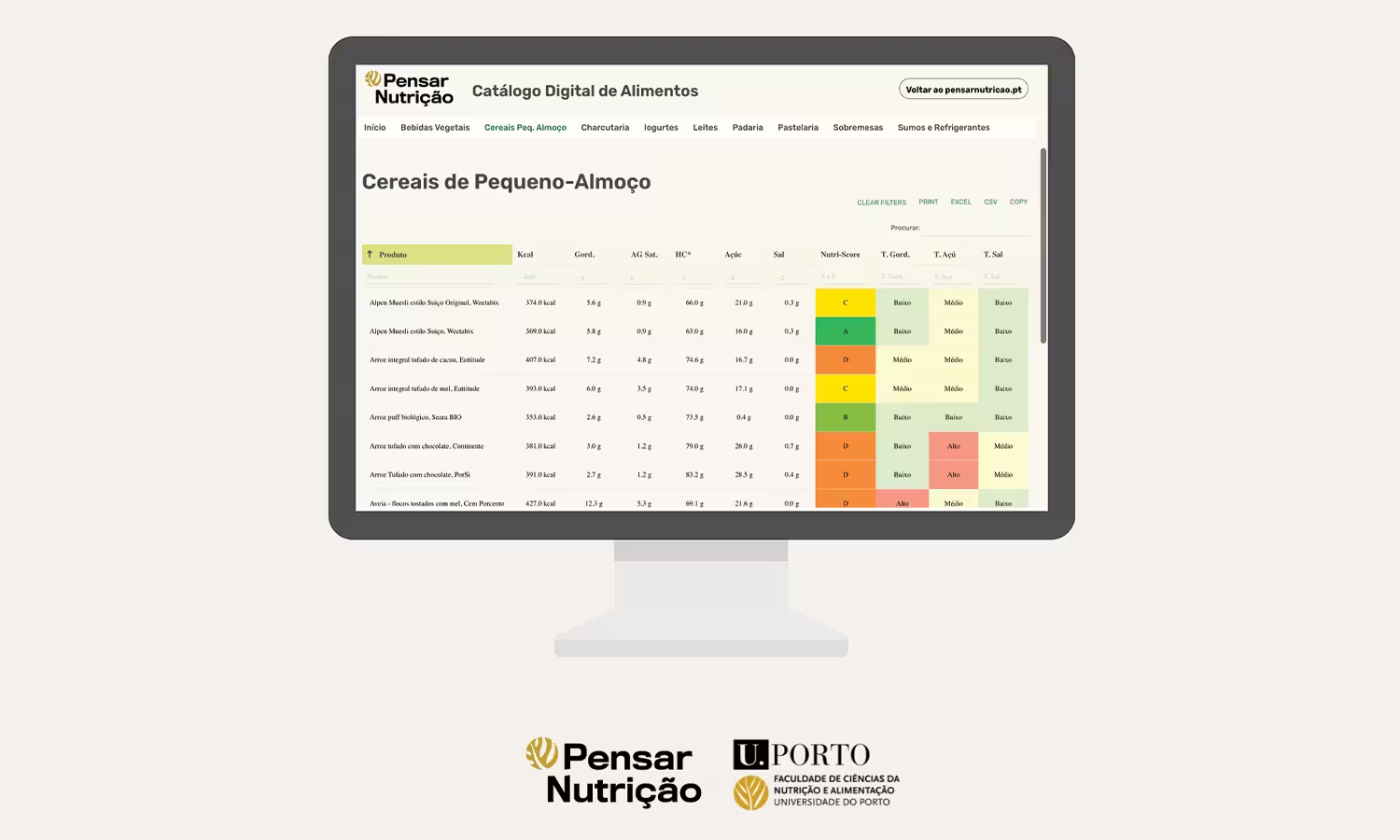
The creation of a Digital Food Catalog , which provides a simple, intuitive and centralized way to provide the nutritional composition of some of the main food products available, is now a strategic necessity in Portugal.
The lack of a comprehensive, up-to-date, comparable, and methodologically standardized public platform in the national context hinders access to quality information for both consumers and healthcare professionals.
Thus, the implementation of a catalog of this nature represents not only a technological advancement, but above all a relevant instrument for public health, food literacy, and citizen autonomy.
Democratizing nutritional information and including consumers with different levels of literacy
In Portugal, health literacy and food literacy show significant variations between population groups. A considerable portion of the population reveals difficulties in interpreting labels, critically evaluating nutritional claims, and understanding ingredients that are technically relevant to their health. A digital catalog with an accessible interface and clear—yet scientifically rigorous—language helps overcome these asymmetries, allowing any consumer to directly compare products and identify critical nutrients (such as salt, sugars, and saturated fats), enabling them to select options aligned with individual needs, clinical restrictions, or dietary goals.
This democratization of information is particularly relevant in a context where food choices are heavily influenced by socioeconomic factors, food marketing, and literacy limitations. A centralized platform thus contributes to consumer empowerment and autonomy, reducing inequalities in access to reliable information.
Relevance for healthcare professionals and for clinical and research practice
Nutritionists and doctors rely on nutritional composition data from foods to plan personalized interventions, monitor progress and support clinical decisions, define the selection of foods to be made available in educational spaces or food education sessions, among other activities.
In the absence of a national database for individual food products, these professionals tend to resort to manually analyzing physical labels (which do not cover collections of comparable products); databases that do not identify brands; international databases whose products do not correspond to the Portuguese market; or scattered compilations on various websites.
A national digital catalog allows quick and standardized access to information on products available for sale in Portugal, with regular data updates. This updating and comparability over time, for example every 2 years, strengthens academic and epidemiological research by providing structured, interoperable data compatible with international methodologies that allow for the evaluation of the evolution of the food supply in our country, for example.
Transparency, trust, and critical literacy
The centralization and immediate availability of information on nutritional composition increases transparency in the food system, also facilitating external market monitoring by academics, regulatory bodies, and civil society organizations. A digital catalog allows for scrutiny of product reformulation levels over time and compliance with nutritional policies (such as targets for salt or sugar content), for example.
This catalog also adds two simplified nutritional labeling tools, internationally validated and widely used in several countries, that allow pre-packaged food products to be classified using a color scale to help consumers make healthier food choices. These are public health tools, calculated based on the nutritional composition of foods, allowing for a quick comparison of nutritional quality between products in the same category.
By making this information easily accessible, critical literacy and public trust are strengthened, reducing the vulnerability of consumers (particularly the most socially vulnerable) to misleading marketing practices or the proliferation of food misinformation.