
Introduction
An electoral program is a document or set of proposals that presents the intentions and plans of a candidate or political party regarding political, social, health, economic, environmental, and other issues. It is created to inform voters about the goals and actions that will be prioritized if a particular party wins the election or supports a government, providing a basis for voters to evaluate and compare the different options available during an election, helping them make informed decisions about who to vote for based on the promises and policies proposed.
An election program is, therefore, a political stance or a way of seeing and acting upon society, and should be considered in its entirety when making an individual decision.
In this exercise, we evaluated the attention given to food and nutrition issues by the different political parties with parliamentary representation and their proposals for improving the eating habits of the Portuguese population. This is our area of work and our professional interest as nutritionists and researchers in the field of public food and nutrition policies. Any praise or criticism is restricted to this programmatic area, and we did not analyze measures that could indirectly affect or not the improvement of the nutritional status of the population. The analysis is biased by our academic view of what a public policy in the area of food and nutrition should be. And it should not, naturally, affect the overall understanding of political programs and the decision-making of voters, which should go beyond nutritional and food issues.
Throughout the text, we will initially refer to what the current food and nutritional problems are in Portugal and (in our understanding) possible solutions.
We describe the programs presented for these 2025 legislative elections and reflect on the programmatic proposals, possibly comparing them with the programs of recent years.
The importance of election programs
We understand electoral programs as contracts with voters, where the priorities of different political forces and their proposed actions for a given period are identified.
The existence of explicit proposals and the eventual ability of voters to evaluate their implementation seems to us a reasonable path that is far from happening. The need to solve short-term problems raised by voters, as is currently happening, for example in the area of health and related to access to consultations and emergency services, ends up relegating to the background more general strategies for improving the health of the population. Or even for disease prevention, which is a clearly downplayed issue in recent elections. In addition to these close ties with voters based on problem-solving and not on general ideological principles, the resolution of problems raised due to pressure from corporations can also end up ideologically distorting electoral programs.
Main food and nutritional problems in Portugal
Inadequate nutrition is one of the main preventable causes of chronic non-communicable diseases—namely obesity, oncological diseases, cerebrovascular diseases, and type 2 diabetes mellitus—which in Portugal contributed to 5.8% of DALYs (Disability-adjusted life years) and 8.3% of mortality in 2021. In Portugal, the prevalence of chronic diseases potentially associated with inadequate nutrition is high, representing one of the main public health problems, accounting for approximately 86% of the total disease burden.
According to the OECD report "The Heavy Burden of Obesity – The Economics of Prevention," in Portugal, 10% of total health expenditure (equivalent to €207 per capita per year) is used to treat diseases related to excess weight, a percentage higher than the OECD average (8.4%), a figure that represents 3% of the Gross Domestic Product (GDP).
Low consumption of whole grains (62,238.56 DALYs; 1.72% of the total), high consumption of red meat (44,060.02 DALYs; 1.21% of the total), and high consumption of processed meat (32,130.30 DALYs; 0.90% of the total) stand out as the main dietary factors contributing to the loss of healthy years of life. These three factors are responsible for approximately 138,428.88 DALYs. It is noteworthy that 56% of the Portuguese population does not reach the recommended consumption of fruit and vegetables (≥ 400 g/day), with the percentage of inadequacy being particularly worrying in the children's (72%) and adolescents' (78%) groups.
It is also important to highlight the social gradient associated with these food-related diseases, as they are more prevalent in populations with lower levels of education, and the significant environmental impact of food choices, contributing to increased water consumption and greenhouse gas emissions.
A science-based strategy for improving the food and nutritional situation in Portugal
We define nutritional policies as public policies aimed at improving the nutritional status of populations. Structurally, these policies attempt to modify the availability of certain foods and their supply in public spaces, and to inform and empower citizens to purchase, prepare, and store healthy foods, especially among the most disadvantaged groups in the population.
In this document, we consider as a reference the food and nutritional strategy proposed by the Directorate-General of Health and its priority program in the area of food for 2022-2030, which is based on the general proposals of the World Health Organization (WHO-Europe), some recommendations from the European Commission (EC), and expert texts on how to improve the food and nutritional situation of a population. The model can be seen in more detail in Figure 1 and in Axes and intervention strategies of the PNPAS 2022-2030 .
This strategy has focused on two main pillars. On the one hand, the pillar of modifying food environments, making them promoters of healthy eating. On the other hand, the modification of individual behaviors, making citizens more capable of making healthy food choices. More recently, the DGS (Directorate-General of Health) proposes to prioritize another pillar centered on strengthening action at the level of health services and the provision of healthcare. This new pillar of intervention is strongly related to the growing magnitude of the problem of overweight, obesity, and inadequate eating habits in the Portuguese population, which requires immediate and more comprehensive intervention through and with health services, ensuring more and higher quality responses and enabling an integrated response from its different actors.
Modifying food environments and the food system requires significant intersectoral work that cannot be limited solely to the health sector, although we believe it should lead the change process. The agricultural sector, which can determine what is produced; the economic sector, which can influence consumers, the food industry, and distribution; the environmental sector, with its strong impact on the entire production chain; local authorities and municipalities, which currently oversee school food provision; social security, with its strong influence on social responses to the most vulnerable populations in terms of food security and on the food supply for young children in crèches and nurseries; and the financial sector, with its influence on the creation of taxes that can affect food consumption, are just some examples of this cross-cutting intervention that can be visible in a national food strategy.
We will look to the programs of the different political parties for proposals regarding the modification of food environments, at the individual level and concerning health services, with the aim of improving food and nutritional status, acknowledging that these proposals may have a significant impact on the prevention and treatment of food-related diseases, which are the main determinants of healthy life years for the Portuguese population, and also have an impact on climate change.
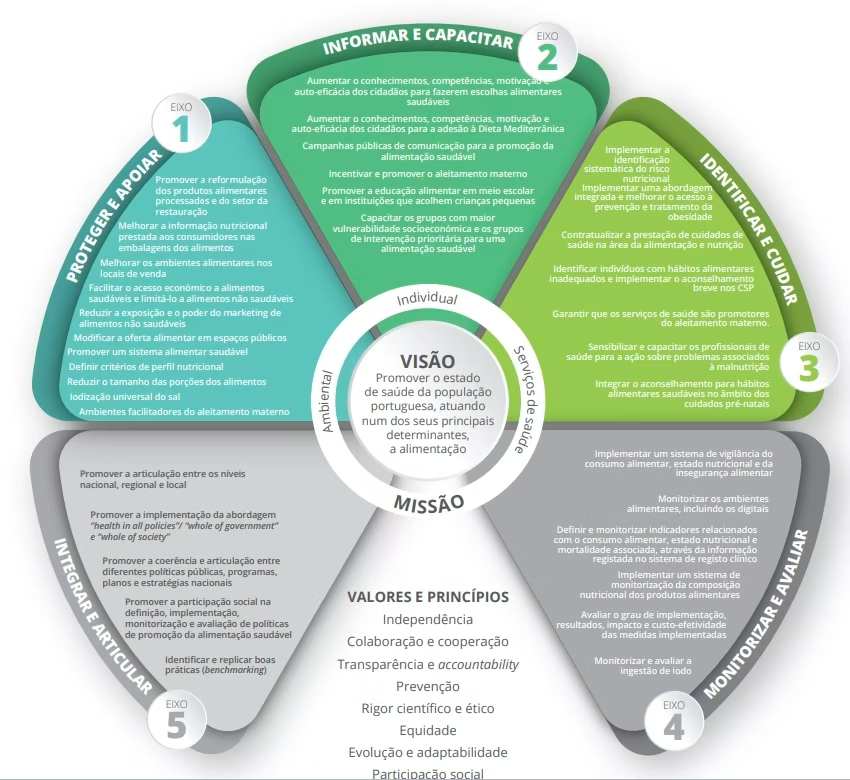
Figure 1. Axes and intervention strategies of the PNPAS 2022-2030
Electoral proposals in the area of food and nutrition presented by political parties in the 2025 legislative elections
AD – PSD/CDS Coalition
In the healthcare field:
Expand Clinical Psychology, Rehabilitation Therapy, and Nutrition in Health Centers.
To progressively build larger multidisciplinary teams within the National Health Service, particularly at the primary healthcare level;
Develop an oral health plan for the most disadvantaged Portuguese citizens, including nutritional and rehabilitation care.
In the area of agriculture food literacy in schools is described , namely:
Develop food literacy initiatives from the first cycle of education onwards, through cooperation between stakeholders in the sector;
Create food education campaigns .
PS – Socialist Party
In the area of health promotion:
"to create an integrated approach to health for the first 1000 days of children's lives, including a review of early intervention, and the creation of guidelines for healthy eating in crèches and nurseries , similar to those that exist for kindergartens and schools";
“to ensure coherent and consistent teams and programs that target the determinants of health, namely (…) nutrition (…)”;
“Implement the National Nutritional Labeling System , promoting the adoption, by producers and retailers, of a single and clear nutritional labeling system, recommended by the DGS (Directorate-General of Health), that helps consumers make healthier food choices, in the context of food literacy campaigns”;
" To prevent obesity and promote the hiring of 120 nutritionists for the National Health Service (SNS) by the end of 2026, guaranteeing their integration into the career of senior health technician and implementing a paid professional internship program in the SNS for nutritionists ." (Note that for psychologists the goal was more ambitious, suggesting their integration into the SNS's basic care package).
The launch of a healthy eating program is contemplated as one of the measures to improve the quality of responses for early childhood.
Nutrition is also included in the set of measures to reduce the cost of living for the Portuguese, through the permanent implementation of zero VAT on a basket of essential goods , with adequate monitoring to ensure that distribution profit margins do not erode consumer gains.
Agricultural policy should be "...capable of producing food in sufficient quality and quantity to ensure a healthy diet ... as well as promoting the Mediterranean Diet."
Investing in small-scale fishing and aquaculture, which promote local consumption of fish, through short marketing circuits and diversification of the species consumed.
Chega Party
Strengthen the implementation of the strategy to combat obesity by encouraging obesity prevention consultations and monitoring patients with pre-obesity and obesity with a view to their treatment in the early stages of disease development, and by implementing obesity and metabolic disorder screening programs by personalized healthcare units and family health units.
Implement educational programs in communities , schools, and workplaces to raise awareness about healthy habits and promote the adoption of preventive behaviors, particularly regarding the consumption of tobacco, alcohol, and drugs.
IL – Liberal Initiative
No specific measures were taken for the area under analysis.
PCP - Portuguese Communist Party
Strengthening the primary healthcare response in maternal and child health, with pediatric, psychological, oral health, ophthalmological, and nutritional consultations .
To ensure the provision of visual health care, physical medicine and rehabilitation, and nutrition in primary health care ;
Investing in the promotion of physical activity in the prevention of inadequate eating behaviors , addictive, violent or risky behaviors;
VAT: creation of a broader basket of essential goods taxed at 6% , including all electricity, natural gas, bottled gas, telecommunications and all products for human consumption , along with a reduction in the standard VAT rate;
The company focuses on short supply chains, prioritizing the supply of canteens in public institutions .
Left Bloc (BE) – 2024 Program
To enshrine in law a meal allowance for all private sector workers , with a minimum value equal to that of the public sector (without prejudice to collective agreements that establish a higher value).
Promoting the production and consumption of locally sourced food products and sustainable agriculture ;
Establishment of a Framework Law for the human right to adequate food and nutrition ;
Applying a zero VAT rate to essential food items ;
Public management of school canteens with local production and short supply chains;
100% reimbursement for prescribed enteral nutrition , free distribution of new semi-automatic insulin devices to all children and young people with type 1 diabetes, as well as to adults with clinical criteria, and reimbursement for obesity medications .
To hire a sufficient number of nutritionists to guarantee, in health centers, the minimum ratio of one nutritionist per 12,000 inhabitants, thus enabling access to nutrition consultations for users with diabetes, hypertension, and other clinical conditions that benefit from specific nutritional plans .
VAT: creation of a broader basket of essential goods taxed at 6% , including all electricity, natural gas, bottled gas, telecommunications and all products for human consumption , along with a reduction in the standard VAT rate;
Free Party
Strengthen all priority health programs with effective investment , ceasing to rely on gambling revenue for their funding;
Strengthen primary obesity prevention strategies by promoting health literacy and effectively implementing programs that promote healthy lifestyles;
Implement early intervention and prevention programs in schools and communities , promoting healthy lifestyles;
Increase regulation of the sale and advertising of unhealthy foods ;
To create a mechanism for co-paying for vitamins , specifically thiamine, for patients with alcohol use disorder who are being treated by specialized addiction treatment teams;
Develop a structured curriculum on health literacy through multidisciplinary teams (with professionals from the fields of psychology, nursing, general medicine, sports medicine, and nutrition).
To ensure that obesity is treated as a chronic disease and to combat the associated stigma, by:
. to include, in the set of medicines subsidized by the National Health Service, anti-obesity pharmacological treatments approved by scientific evidence and international regulatory bodies;
. Implement integrated and multidisciplinary clinical protocols involving family doctors, endocrinologists, nutritionists, psychologists, and other healthcare professionals, ensuring personalized and patient-centered care;
Decentralize access to obesity treatment , ensuring equitable national coverage, including rural areas and areas of low population density;
To promote the ongoing training of healthcare professionals for a non-stigmatizing clinical approach to obesity , contributing to the fight against institutional fatphobia;
To monitor the clinical and economic outcomes of available therapies , ensuring effectiveness, transparency, and rationality in the use of public resources ;
To recognize that the co-payment of anti-obesity medications represents a measure of social justice and the promotion of public health, allowing for the prevention of the worsening of comorbidities such as type 2 diabetes, hypertension, cardiovascular diseases, and certain types of cancer, reducing the economic and human impact of these pathologies.
Strengthen primary healthcare , bringing it closer to the population and tailoring it to the needs of each user by:
. to work towards guaranteeing that all people in Portugal have a family doctor and nurse, integrated into teams with technical and operational assistants and multidisciplinary coordination (Psychologists, Social Workers, Psychotherapists, Physiatrists, Physiotherapists, Dentists, Nutritionists );
Create and implement the National Health Ambassadors Program, coordinated by the Directorate-General of Health in collaboration with health centers and local authorities
...aiming to empower women as agents of change in their communities. This program aims to promote women's health and improve health literacy;
...addressing topics such as sexual and reproductive health, mental health, nutrition, and access to health services. The Health Ambassadors act as liaisons between health services and their communities, promoting healthy practices and facilitating access to healthcare.
Create a national program of Living Solar Schools, equipping school buildings with photovoltaic panels and promoting energy communities that transform schools into positive energy spaces, capable of sharing surplus energy with neighborhood projects. Outside of school hours, schools should open themselves to the community as multifunctional centers:
Kitchens used by those who want to start small food businesses. School kitchens can function as food experimentation laboratories, and cafeterias can be transformed into community canteens with healthy meals, based on short supply chains, local production, and fair prices; courtyards can be converted into climate shelters or community gardens ;
To revitalize public canteens so that the main objective is the well-being and nutrition of children and young people, and not profit , through a service provided by the educational establishments themselves or by local authorities, and not by private companies, improving the meals provided both in terms of quality and quantity, thus providing healthy meals suitable for the various age groups of students, with due quality control, ensuring the essential nutrients to promote healthy eating and lifestyles, enabling the use of regional products, promoting the practice of the circular economy.
Create specific support measures to alter production processes, enabling the replacement of raw materials with a high ecological footprint, the incorporation of local raw materials, and the optimization of production methods.
PAN – People – Animals – Nature
In the food sector, PAN proposes:
Implementing a national strategy for legume production and promoting campaigns such as "Meatless Mondays" to encourage healthier and more sustainable eating habits .
Reflection and comments
In general, the various party platforms continue to disregard the promotion of healthy eating as a central determinant of the health of the Portuguese population, and many of the comments we make in this analysis of the platforms for this election repeat the same arguments we used in 2024 .
Given the very high prevalence of chronic diseases potentially associated with diet, affecting millions of Portuguese people (obesity, diabetes, hypertension, certain oncological diseases, etc.) and representing about 86% of the total disease burden, the absence of any reference to this situation and its modification is surprising.
Most determinants of chronic diseases, particularly dietary ones, are modifiable, and there is broad scientific consensus on the intervention models to be used for their modification. However, these integrated strategies are not visible in the various programs. Programs in the food and nutrition area are scarce, and when measures in this area do appear, they are piecemeal, and a structural model like the one presented above cannot be found. In any case, most party programs, and even those for other areas, adopt this format.
In the area of health, almost all programs reflect the political discussion throughout the last year and the previous election campaign, regarding the shortage of human resources (especially doctors) and how to solve them, and the formats for organizing the healthcare network, with little space for discussion about the health/illness of the Portuguese population, what determines it, how to prevent it, or how to alter the course of the disease.
The discussion model continues to be excessively focused on the curative model (although the PS and Livre programs this year have given greater emphasis to prevention issues) and on what immediately concerns voters, particularly older and sicker voters (access to healthcare), and little on disease prevention, which in fact continues to represent only 2% of healthcare spending in Portugal.
The focus of the debate on these issues also ends up reflecting the space of public opinion, the voice and daily presence of the most powerful corporations in the media, the power of commercial interests that determine health, the immediate needs of the population, and some inability of civil society and other health agents, such as nutritionists and their representatives, to actively participate in these debates.
As is generally understood, improving diet and nutritional status is more easily achieved through intersectoral measures that mobilize different areas such as education, local authorities, agriculture, or the environment, but this model is not yet very visible in the proposals presented, which seem to have been made separately for the different areas.
It should be noted that in the agricultural sector, and although not directly related to improving the nutritional status of populations, these electoral programs have increasingly referenced the need to increase food sovereignty and prioritize the consumption of national food products. This ranges from traditionally right-wing parties to the PCP (Portuguese Communist Party), which may pose a nutritional challenge in the future, as the nationality or proximity of a food product does not define its nutritional value.
Essential areas such as local government, which today has important competencies in the food sector, or the environment, which is heavily impacted by food choices, remain largely absent from the political programs of the main political parties in Portugal.
Comparing the two parties in the "power arc," or those most likely to be part of the government after the elections, and despite generally suffering from the problems identified above, the Socialist Party presents a more robust program in these elections, with several verifiable and more cross-sectoral measures (VAT, Labeling, Hiring of Nutritionists, Social Action, Mediterranean Diet). Conversely, the AD-PSD/CDS coalition not only presents a set of very weak measures in the area of food and nutrition, worsening compared to the version presented in 2024, but also relegates actions to promote food literacy to the agricultural sector, in cooperation with sector agents (producers), which could potentially lead to some ethical conflicts.
The Chega party, in Chapter XVIII of its program, dedicated to health, repeats the measure from 2024, in the area of combating obesity through incentives for prevention and screening consultations for obesity and monitoring in the early stages of the disease's development.
The Liberal Initiative continues to fail to present measures directly related to nutrition/food.
Parties situated further to the left traditionally present more measures, and of higher quality, in the area of food/nutrition.
The Left Bloc maintained its 2024 program, which identifies various cross-sectoral measures covering the three pillars we considered essential for a national food strategy. In particular, greater attention is given to food-related pathologies and the role of nutrition in these clinical conditions, making it one of the strongest programs analyzed in this area.
The Portuguese Communist Party also pays attention to food and nutrition issues, as is its tradition, but it almost always places them alongside or integrated into other measures, without taking care to integrate them or having a cohesive approach to this aspect.
Finally, the Free Party presents what we consider in this analysis to be the electoral program most aligned with international best practices for establishing a food policy, integrating in a diversified way different strategies in the areas of modifying food environments, eating behavior, and the health system and its professionals. Due to its depth, scope, and intersectorality, it is a program that stands out positively from the other political parties, although, given its position in parliament, it may have little capacity to translate these viewpoints into political debate or legislative action.
The electoral programs analyzed since 2019 have been gradually increasing references to food issues, some nutritional issues, and the role of nutritionists, particularly in parties that we can traditionally place further to the left, including this time the Socialist Party. However, the organization of the areas of intervention still does not seem to have a clear, coherent, and integrated strategic thought or objective within other policies, and is clearly insufficient in the face of a population greatly affected by an inadequate dietary model currently prevalent among us and with a large impact on the disease burden of the Portuguese.
It should also be noted that these 2025 legislative elections take place almost a year after the previous parliamentary elections in 2024, and many parties concentrated their efforts on what are their main electoral platforms and what can make a difference to the electorate, which may have affected the time and discussion needed for more comprehensive electoral programs with more definition and updating in different areas.
Final note 1: the authors have no political affiliation and the opinions expressed in this text reflect solely their personal views.
 Final note 2: For those who are curious, you can read the different party programs here, in order of presentation in the text:

 AD https://ad2025.pt/pdf/programa-eleitoral.pdf
 PS https://ps.pt/wp-content/uploads/2025/04/programa-eleitoral.pdf
 Chega https://drive.google.com/file/d/1sj8padeIxiD3D3JGbQqoYzF1tCko70f2/vie w
 IL https://iniciativaliberal.pt/wp-content/uploads/2025/04/Iniciativa-Liberal-Programa-Eleitoral-2025.pdf
 PCP https://www.cdu.pt/assets/docs/2025_compromisso_eleitoral_pcp_legislativas.pdf
 BE https://www.bloco.org/media/Manifesto_Bloco_legislativas2025.pdf
 Livre https://partidolivre.pt/wp-content/uploads/2019/04/ProgramaV1.pdf
Written by

Pedro Graça, Director of the Faculty of Nutrition and Food Sciences at the University of Porto

